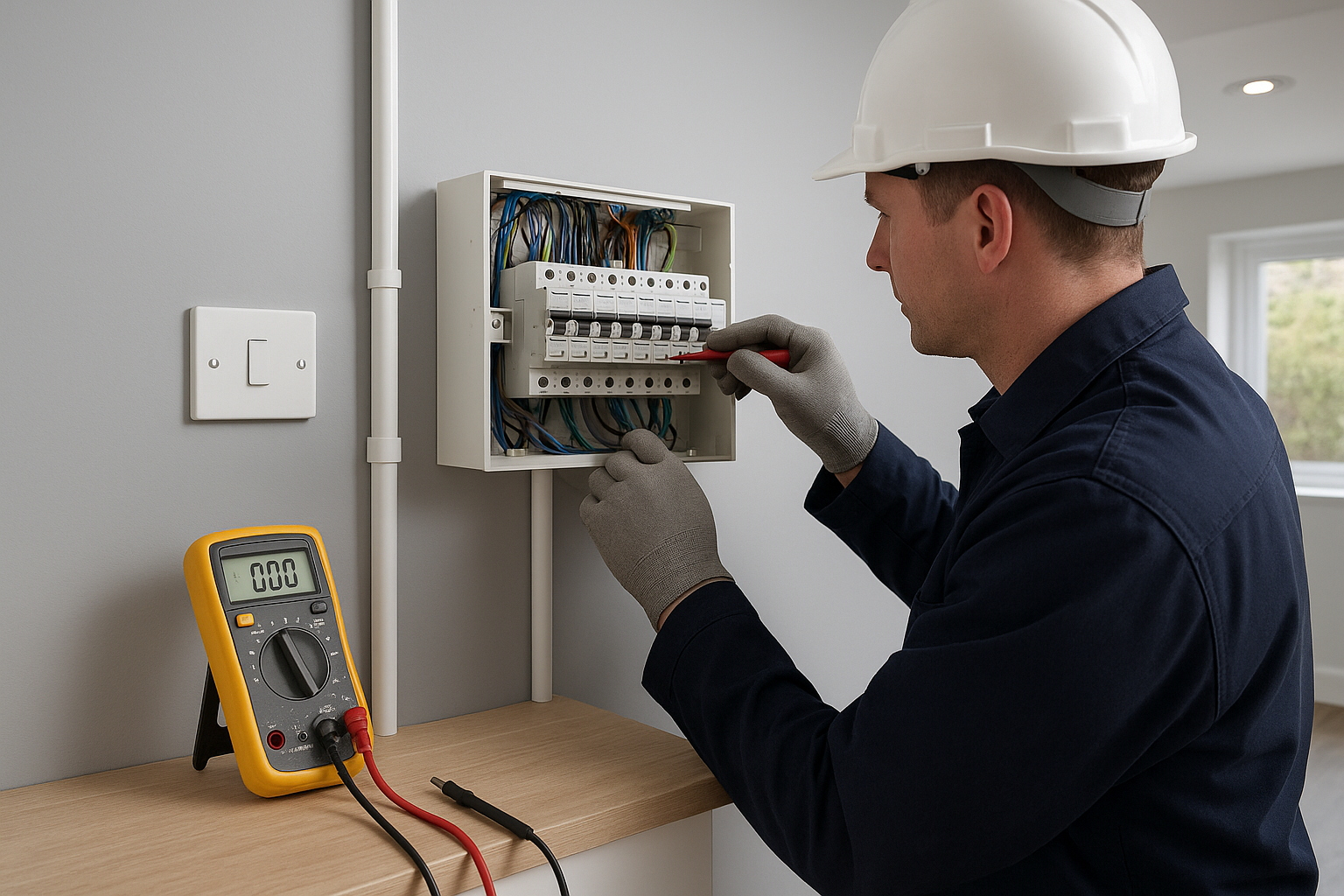
If you need rewiring in Cheshunt, Sparkora Energy Electricians can help with everything from a full house rewire to a smaller partial rewire, period property work and wiring during renovation. Rewiring is often needed when older cabling, repeated faults, missing earthing or an inspection result show that the existing installation is no longer suitable for safe everyday use.
We work across Cheshunt, Waltham Cross, Broxbourne, Goffs Oak, Wormley and Enfield, including homes near Cheshunt Station, Brookfield Centre, Cedars Park and the River Lea. The properties we’re asked about most often include Victorian terraces, older family houses, converted flats, modern flats, shops and offices, and homes that have had several alterations over the years.
For landlords and property managers, rewiring is not just about replacing old cable. It is also about keeping records in order, arranging access, making sure tenants are informed, and dealing properly with inspection findings. If an EICR has highlighted deterioration, lack of earthing, damaged accessories or overloaded circuits, it is sensible to get the installation assessed before the issue grows into a wider fault.
Call 020 3670 4292 or email info@cheshunt-electricians.co.uk to request a visit today. Our base is 7 College Rd, Cheshunt, Waltham Cross EN8 9LP, United Kingdom, and we operate 24 hours for electrical support.
Common signs that a property may need rewiring include old rubber or fabric cabling, frequent tripping, intermittent lighting faults, sockets that feel loose or discoloured, no visible earthing, repeated fuse failures, or a failed inspection. If you notice burning smells, heat around accessories, crackling, or visible damage, switch off the affected circuit at the consumer unit if it is safe to do so and keep clear of the area until it has been checked.
Our rewiring service is designed around the property and the access available. In some homes the work can be completed with minimal disruption to one area at a time; in others, especially where cabling is very old or concealed routes are poor, a more complete rewire is the safer long-term option. We can also discuss related work such as consumer unit work, lighting installation, socket installation, electrical fault finding, electrical repairs and emergency electrician support where needed.
Full House Rewiring in Cheshunt
A full house rewire is usually the best option where the existing wiring is outdated, unsafe, or too altered to rely on for the future. In Cheshunt, this often applies to older houses with legacy wiring, properties that still show signs of rubber or fabric cable, or homes that have been extended, altered and patched over time without a full upgrade.
Before any full rewire, we look at the layout of the property, the condition of the existing circuits, the age and type of equipment in place, and how the home is used day to day. For landlords, this also means considering tenant access, move-in dates, void periods, and how to keep records of the work carried out. A full rewire may be the right answer where there are too many faults to keep repairing individually.
Typical work can include replacing old cabling, renewing accessories, improving circuit layout, updating lighting and socket positions, and checking that the installation is suitable for modern demand. In some cases, consumer unit work is also part of the project so that the new wiring is protected correctly.
We regularly see full rewire enquiries from homes near Cedars Park, the Brookfield Centre area, and older streets where the electrical installation has been changed over several decades. If your property has frequent faults, no earth continuity, or an inspection that has highlighted serious issues, a full rewire may provide the cleanest route back to a safe, practical installation.
Some electrical work is notifiable under Part P of the Building Regulations, and rewiring is one of the jobs that should be handled and certified properly. Customers should ask for current scheme registration and insurance details before electrical work is booked.
Partial and Room Rewiring in Cheshunt
Partial and room rewiring is often the right choice when only part of the property is affected. This can suit a kitchen, loft conversion, extension, bedroom, office, or a section of the house where the wiring is visibly older or has started to fail. It can also help where one area has been altered during previous building work and the wiring no longer matches the rest of the installation.
In many Cheshunt homes, especially older houses and converted flats, the electrical system has been improved in stages. That can leave a mix of cables, fittings and circuit arrangements from different periods. A partial rewire helps bring one area up to a better standard without disturbing parts of the property that are still serviceable.
We often recommend partial rewiring where there are frequent faults in a single room, damaged lighting circuits, poor socket layouts, or signs of overheating around accessories. It is also useful where a room has been renovated recently but the underlying wiring was left behind. In those cases, the visible finish may look new while the electrical circuit still needs attention.
For landlords and property managers, partial rewiring can be a practical way to deal with a failed inspection item in a specific area before it affects tenant safety or creates a wider compliance issue. We can explain the likely scope clearly so you can plan access, budgeting and records around the work.
Period Property Rewiring in Cheshunt
Period property rewiring needs careful planning because older buildings often have construction features that affect how cables can be routed. Victorian terraces, older cottages, and converted period buildings may have solid walls, limited voids, fragile finishes, and previous alterations that make a standard approach unsuitable.
In and around Cheshunt, period homes often come with a mix of original features and later electrical additions. Old rubber or fabric cabling, outdated fuse arrangements, and missing earthing are all common concerns. A period property may also have been extended or subdivided, which can leave the wiring harder to trace and maintain.
Our approach is to assess the existing installation carefully, identify the safest route for new wiring, and explain any likely disruption before work begins. That may include lifting floor sections, taking care around plaster and decorative finishes, or planning the work in stages to keep the property usable where possible. For landlords, this is especially important when the building is occupied or when access is limited to certain rooms on certain days.
We also consider how the property is used. A period house used as a family home has different demands from a converted flat, a small office, or a shop unit near local transport and retail areas. Good rewiring should make the installation safer and more practical without creating unnecessary damage or hidden problems later.
Rewiring During Renovation in Cheshunt
Rewiring during renovation is often the easiest time to do the work, because walls, floors and ceilings may already be open. If you are refurbishing a house, converting a loft, extending a kitchen, or modernising a flat, it is usually sensible to review the electrical installation before finishes go back on.
Renovation work in Cheshunt can uncover old cable routes, hidden junctions, or previous DIY alterations that were never properly documented. That is why electrical checks should be part of the wider plan from the start, not left until the decorating stage. Once plasterboard, flooring and new units are in place, access becomes much more difficult and more expensive.
We regularly support homeowners, builders and property managers with renovation wiring where the property needs first fix and second fix wiring, new lighting points, additional sockets, improved circuit design or changes to the consumer unit. If the existing installation is tired, damaged or poorly arranged, renovation is often the right moment to improve it properly.
For landlords, renovation rewiring is also a chance to tidy up records and make the property easier to manage in future. Clear labelling, sensible circuit grouping and a properly documented installation help when tenants move in, when faults occur, or when the next inspection is due.
If you are planning work near Cheshunt Station, Lee Valley Park, the River Lea or around the wider town centre, it is worth arranging the electrical side early so the programme stays on track. We can coordinate the work around access and the stage of the project.
First Fix and Second Fix Wiring in Cheshunt
First fix and second fix wiring is the standard staged approach used on many rewires and renovation projects. The first fix stage is where the hidden wiring routes are installed before plastering, flooring and final finishes. The second fix stage is where switches, sockets, light fittings and final accessories are fitted once the building work is ready.
This approach is especially useful on larger rewires, extensions, loft conversions and refurbishment projects in Cheshunt and nearby areas such as Waltham Cross, Broxbourne, Goffs Oak, Wormley and Enfield. It allows the electrical work to be planned around the building schedule rather than squeezed in at the end.
During first fix, the aim is to put the installation routes in place cleanly and safely, with attention to the future use of each room. During second fix, the visible equipment is installed and tested, and any issues can be checked before the space is handed back into normal use. This is often the point where lighting installation, socket installation and consumer unit work are completed or finalised.
For landlords and property managers, first fix and second fix wiring also makes it easier to keep records of what has been changed and when. That matters when you are dealing with an inspection, a tenant query, or a future repair. If a property has had repeated faults or an old installation that has been patched over, a planned staged rewire can be a better long-term solution than ongoing repairs.
We are often called after an EICR has identified issues, or after a tenant has reported intermittent lighting, tripping, or loss of power. In those cases, we can assess whether the fault is localised or whether the wider installation should be renewed as part of the same project.
Our recent local work has included a new light fitting support in Enfield, where we checked the switch line and left the room ready for normal use; a lighting fault repair in Waltham Cross, where we traced an intermittent lighting fault and restored safe use of the affected rooms; and an emergency power loss callout in Broxbourne, where we identified the problem circuit and explained the next repair steps before leaving the installation secure.
These jobs show the sort of practical, property-focused work we carry out every day: tracing faults, checking circuits and equipment, and leaving the installation in a safer condition with clear advice on what happens next.
Landlords and property managers should make sure tenants are informed before attendance, that access arrangements are agreed in writing where possible, and that any electrical records are kept together with inspection reports and completion details. If a tenant reports a smell, heat, sparking or repeated tripping, the affected circuit should be switched off if safe, and a visit arranged promptly.
If you need help with rewiring in Cheshunt, or you are dealing with a failed inspection, old cabling, no earthing or frequent faults, call 020 3670 4292 today. Sparkora Energy Electricians can discuss the right scope of work for your property, explain the likely disruption, and arrange a visit at a time that suits the building and its occupants.